The Biofeedback Institute of Los Angeles was founded on two simple beliefs: people can learn to optimize their ability to self-regulate, and that progress begins with innovation, curiosity and the willingness to adapt.

The Biofeedback Institute of Los Angeles was never simply a place filled with instruments.
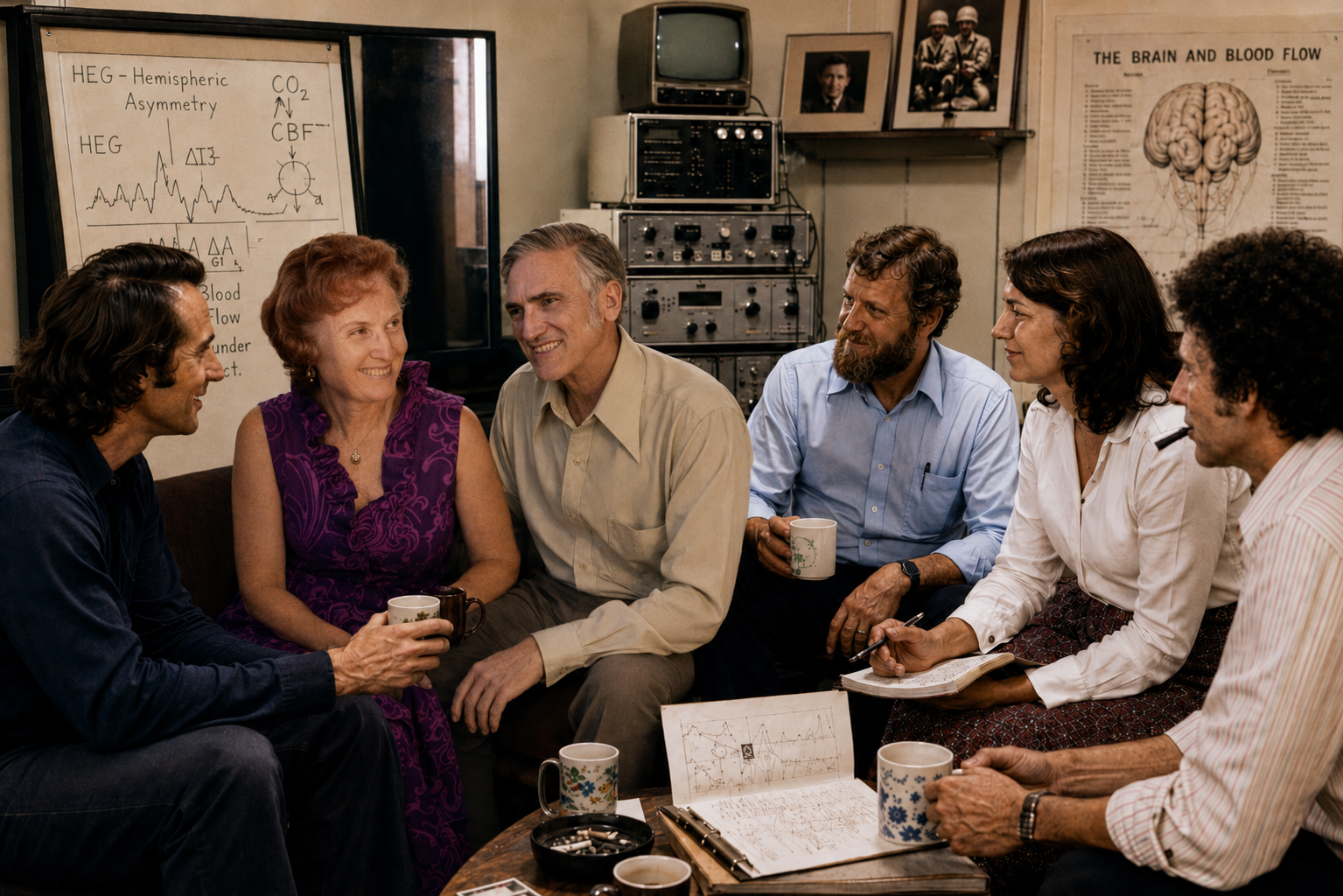
It was a meeting place for psychologists, engineers, physicians, educators, artists, meditators, and curious people who believed that the human nervous system still held untapped possibilities.
At the center of that community were Hershel Toomim, Sc.D., an inventor, engineer, and researcher, and Marjorie Toomim, Ph.D., a psychologist whose clinical work helped redefine how physiological information could be used in psychotherapy.
Together they shared a simple but profound conviction:
If people can learn to observe their physiology, they can learn to change it.
Today that idea seems almost self-evident.
In the late 1960s and early 1970s, it was revolutionary.
Long before wearable devices, mindfulness apps, and brain-training technologies entered the mainstream, a small group of researchers in Los Angeles was asking:
Could people learn to voluntarily influence the hidden physiological processes that shape thought, emotion, health, and performance?
That question became the foundation of the Biofeedback Institute of Los Angeles.
More than fifty years later, it continues to guide our work.

Los Angeles was an unusual place to be.
The late 1960s and 1970s were marked by an explosion of curiosity about consciousness, learning, creativity, and human development. Engineers were talking with psychologists. Physicians were attending meditation retreats. Artists, educators, scientists, and spiritual teachers were sharing ideas that rarely crossed paths in traditional academic settings.
Places like Esalen became gathering points for conversations about human potential, while researchers at institutions such as the Menninger Foundation—including Elmer and Alyce Green—were documenting the remarkable physiological control demonstrated by experienced practitioners of contemplative traditions.
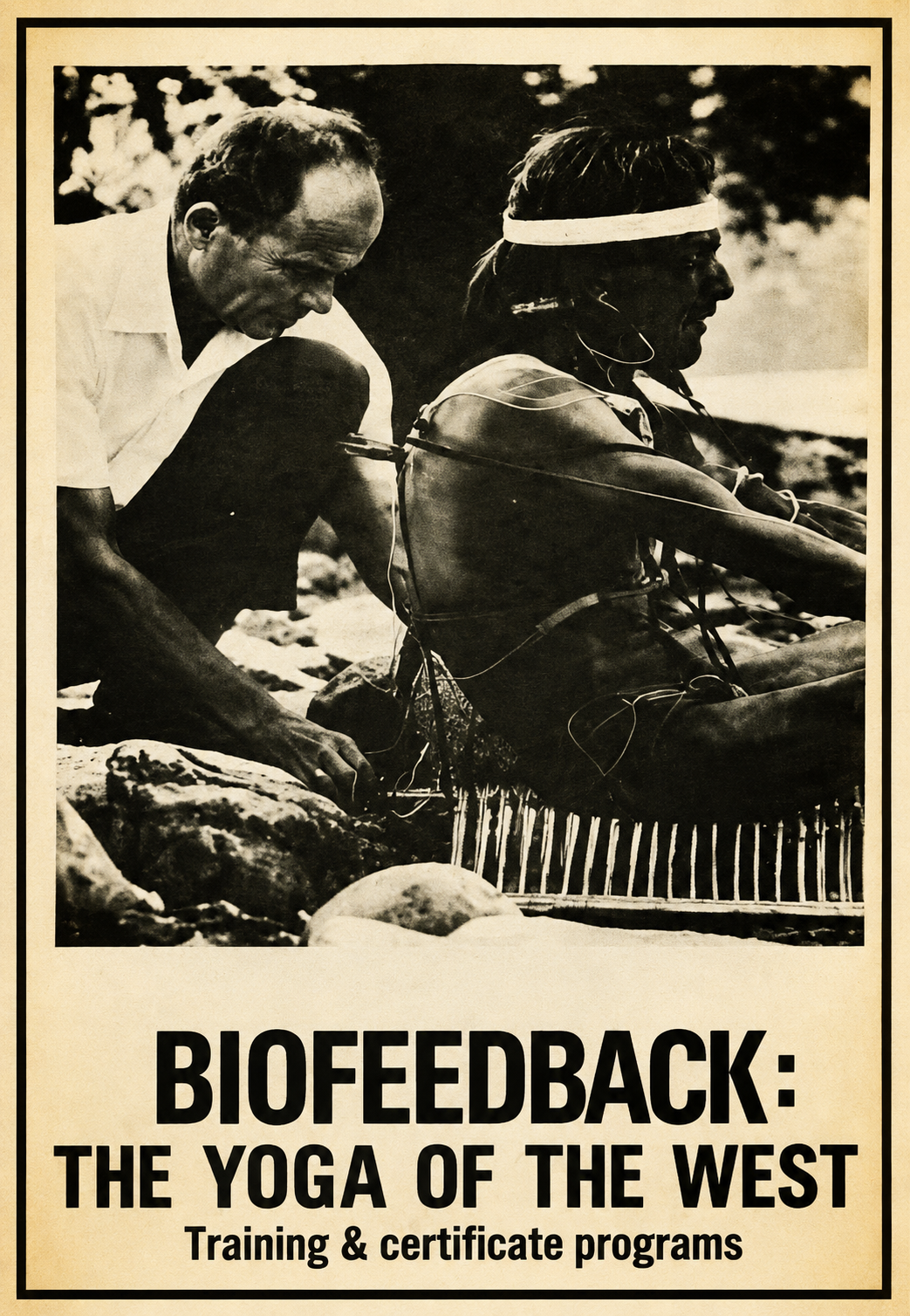
Some called biofeedback “The Yoga of the West.”
It was an attempt to describe that modern instruments were beginning to reveal physiological abilities that contemplative traditions had explored for centuries.
The Toomims were part of this broader movement—but they pursued their own distinctive path.
Many of the Institute’s earliest conversations didn’t happen in conference rooms.
They happened around a kitchen table.
On a patio.
Beside a swimming pool.
The Toomim home became an informal laboratory where researchers, clinicians, students, neighbors, and friends gathered to exchange ideas and test assumptions about learning, physiology, relationships, and consciousness.
Among the most memorable gatherings were what participants affectionately called “nude marathons.”
These were not athletic events, nor were they intended to shock or entertain.
Inspired by the encounter-group movement of the era, participants voluntarily removed many of the ordinary markers of social identity—including clothing—to create an atmosphere that emphasized openness, equality, and authenticity. Hours often stretched into days as people in deep conversations, challenged long-held assumptions, explored interpersonal dynamics, reflected on emotional patterns and examined what it meant to be genuinely seen by others.
The swimming pool became part of the setting, not the point.
The purpose was never exhibitionism.
It was exploration.
Participants were asking whether removing layers of social convention might also remove barriers to honesty, connection, and self-understanding.
Looking back, those gatherings reflected a willingness to question assumptions that may people never think to question. They also reflected the optimism of an era that believed human beings could continue to learn and evolve throughout life.

During the 1970s, researchers explored whether physiological self-regulation could provide a measurable complement to practices developed in contemplative traditions. The phrase “The Yoga of the West” reflected one historical attempt to describe biofeedback’s potential. Today, the field encompasses neuroscience, psychophysiology, performance, education, and self-regulation while continuing to explore the relationship between objective measurement and subjective experience.
While some researchers focused primarily on measuring physiology, the Toomims became interested in something different.
Could physiology become a teacher?
Marjorie Toomim recognized that signals such as skin conductance, muscle tension, peripheral temperature, respiration, and heart activity often reflected emotional processes long before a person could describe them in words.
She demonstrated that physiological feedback could enrich psychotherapy by giving both therapist and client another window into human experience.
Meanwhile, Hershel Toomim continued developing new instrumentation that would eventually lead to one of the field’s most important innovations:
Hemoencephalography (HEG).
His work demonstrated practical ways of observing changes associated with regional cerebral blood flow and oxygenation in the prefrontal cortex, opening new possibilities for attention training, executive functioning, cognitive performance, and neurofeedback.
What began as curiosity gradually became technology.
What became technology eventually became education.
From the beginning, the Institute believed that biofeedback belonged not only in research laboratories, but also in classrooms, clinics and communities.
Over the decades, BILA has trained hundreds of practitioners, contributed to scientific conferences, supported clinical innovation and introduced generations of students to the principles of psychophysiology and self-regulation.
The Institute has also served as a place where people from many disciplines could continue learning from one another—a tradition that remains central to our mission today.
Today, the Biofeedback Institute of Los Angeles continues to advance research, professional education and collaborative inquiry while preserving the history of one of the field’s pioneering institutions.
Our work now includes contemporary biofeedback and neurofeedback, HEG, heart-rate variability, psychophysiological assessment, consciousness research, group learning and emerging technologies that help people better understand themselves.


For more than five decades, BILA has remained committed to advancing the understanding of the
brain, body, and consciousness through science, education, and collaboration.


Building on more than five decades of pioneering research, BILA continues its mission through
experienced leadership, scientific collaboration, and a commitment to
advancing the field of biofeedback and psychophysiology.


.png)
Building on 50 years of pioneering research, the Biofeedback Institute of Los Angeles (BILA) empowers individuals by democratizing access to brain health and performance training. We provide evidence-based, affordable, and automated solutions that foster self-regulation, resilience, and an enhanced quality of life for our community and future generations
Historical Archive
Biofeedback Education
Skills Course
Gold Mind Brain Gym
Community Resources
info@biocompresearch.org
Biofeedback Institute of Los Angeles 501(c) 3
Preserving the Past. Advancing the Future.
© 2026 Biofeedback Institute of Los Angeles.